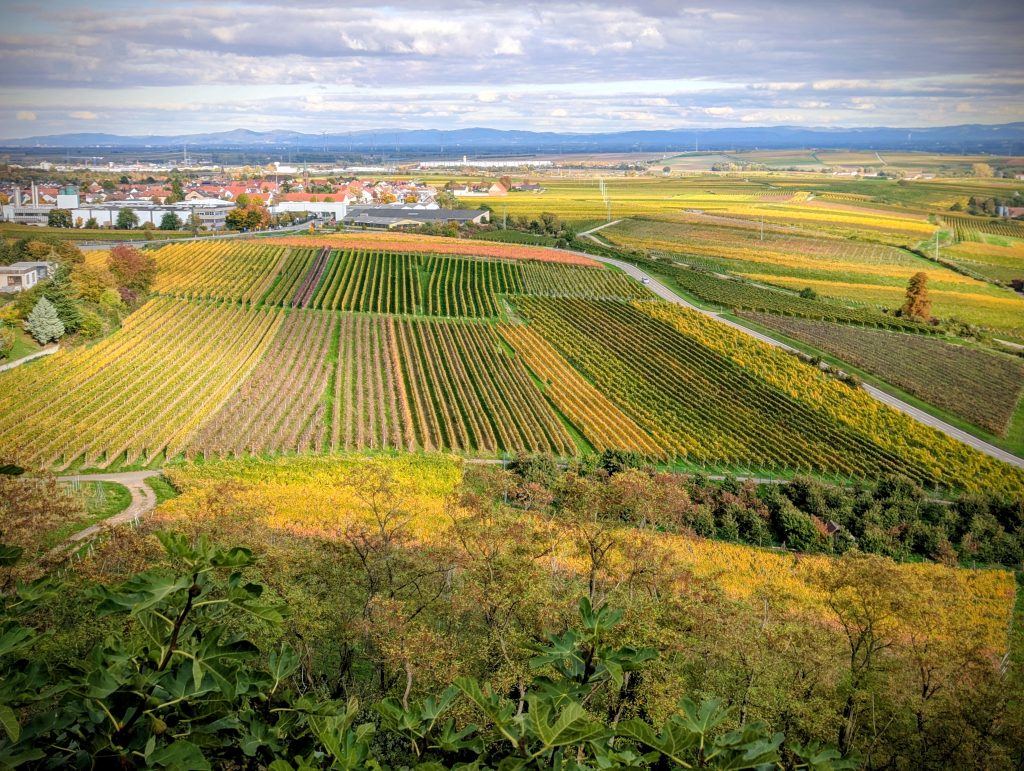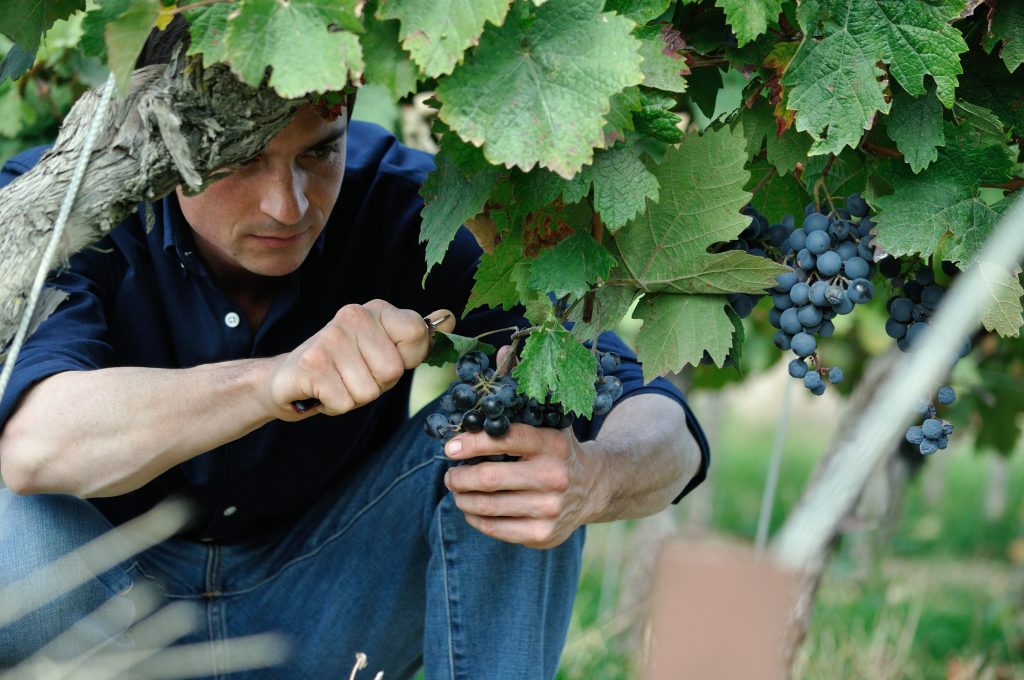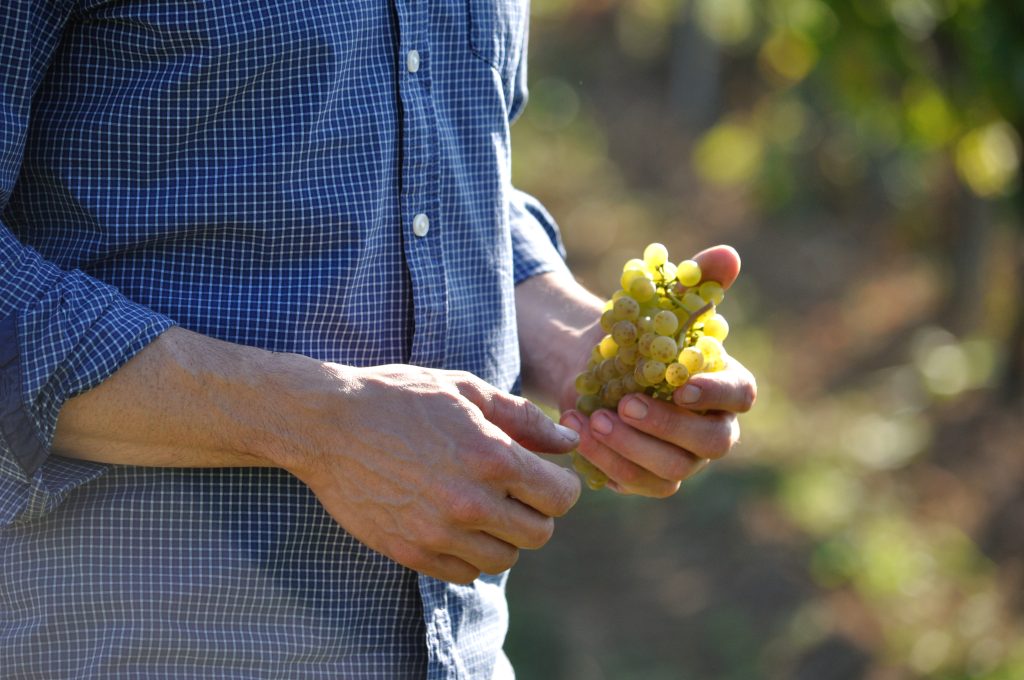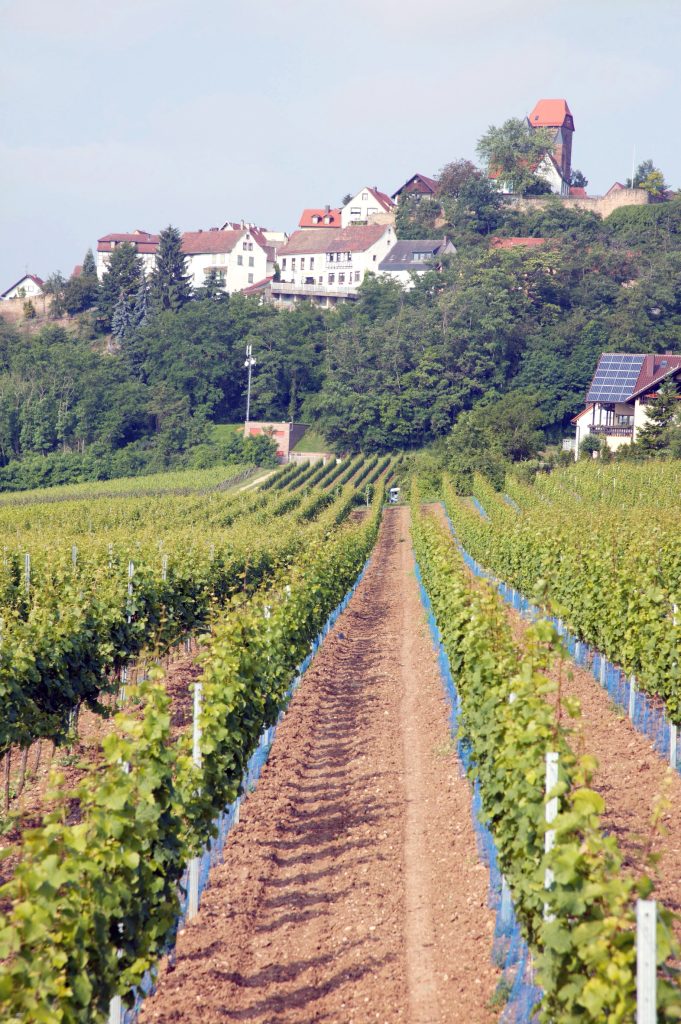
Our vineyards are located around Neuleiningen – close enough for short distances, yet diverse enough to create remarkable differences. Here, tertiary limestone and red sandstone meet.
What is separated by only a few hundred meters differs distinctly in style, structure, and expression.
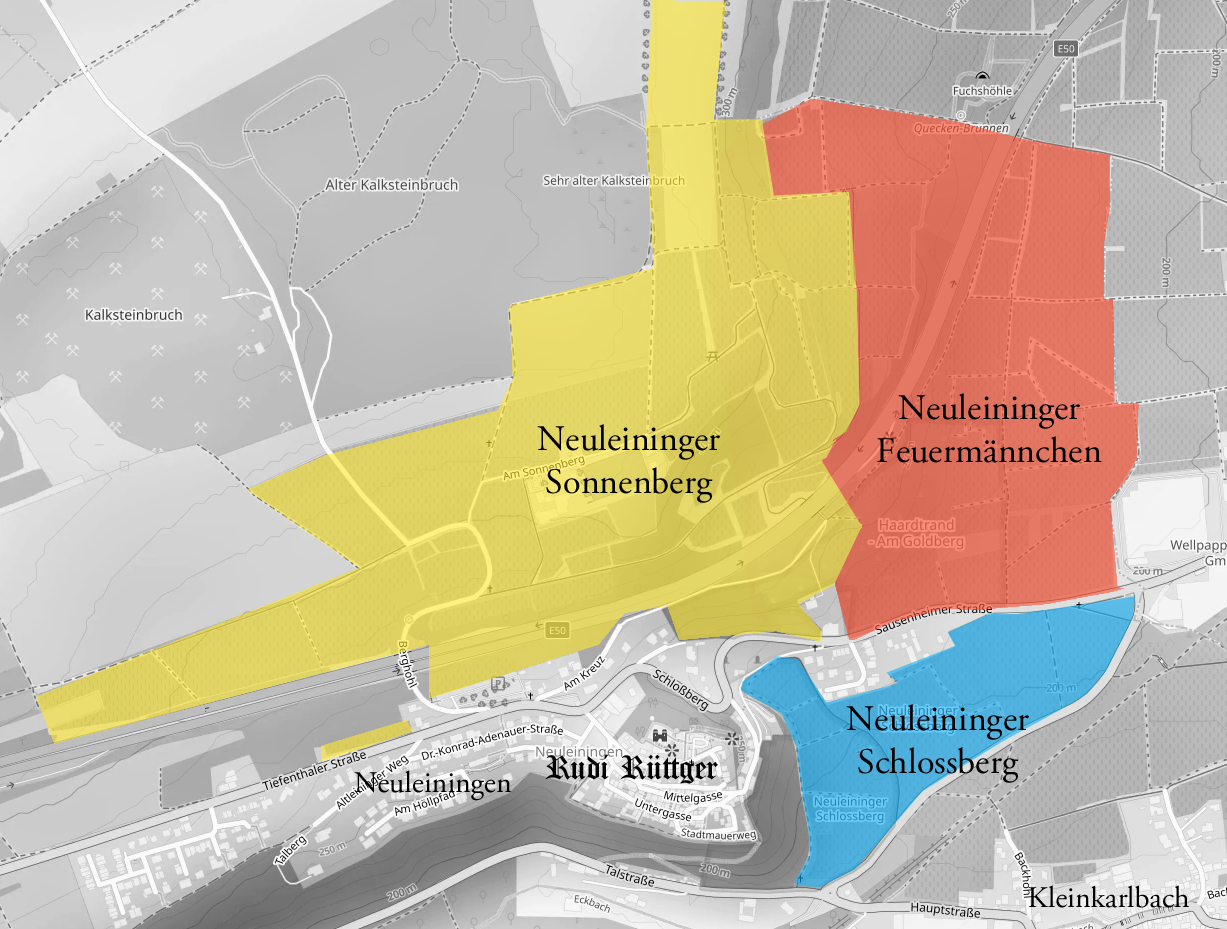
Neuleininger Feuermännchen
At the sheltered foot of the slope below Neuleiningen, our vineyards lie in the Feuermännchen site. Calcareous marl and sandstone shape the soil – and with it, the expressive character of our grapes.
Riesling thrives here above all, from our oldest vineyard planted in 1958 to our youngest from 2024. In addition, we cultivate Pinot Blanc, Pinot Gris, Chardonnay, and Gewürztraminer.
The wines from this site develop ripeness early, take on a distinctive mineral tone, and reflect the strength and structure of this place with elegance.
Neuleininger Sonnenberg
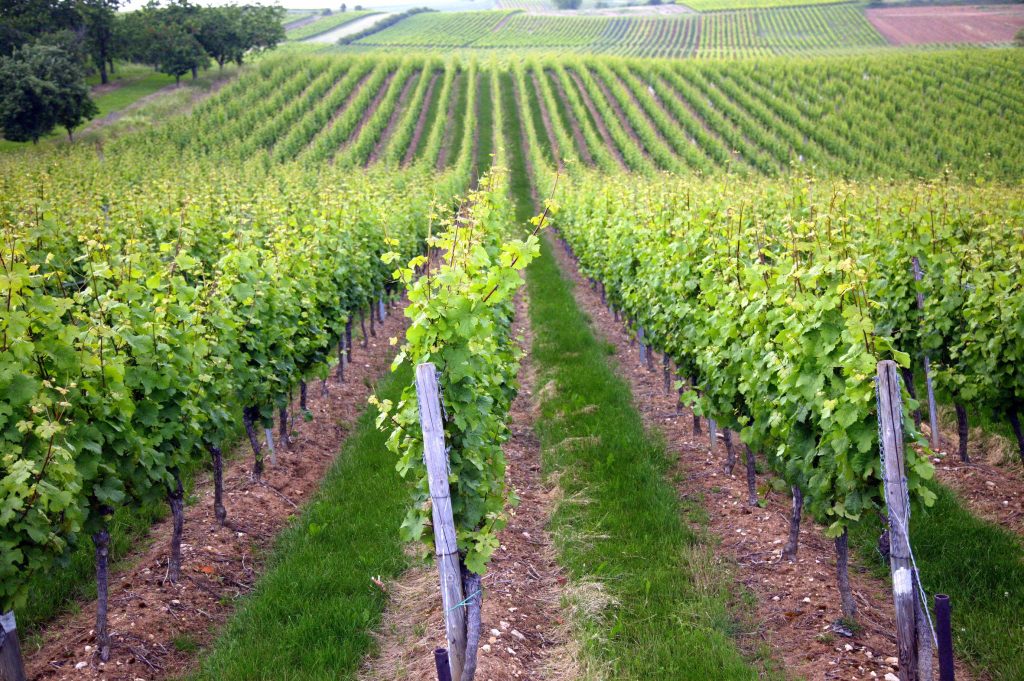
On the Neuleiningen Sonnenberg, rising up to 320 meters above sea level, the calcareous Muschelkalk stores the warmth of the day and releases it slowly – ideal conditions for our vines. In the lower sections, calcareous marl soils dominate, lending the wines precision and minerality.
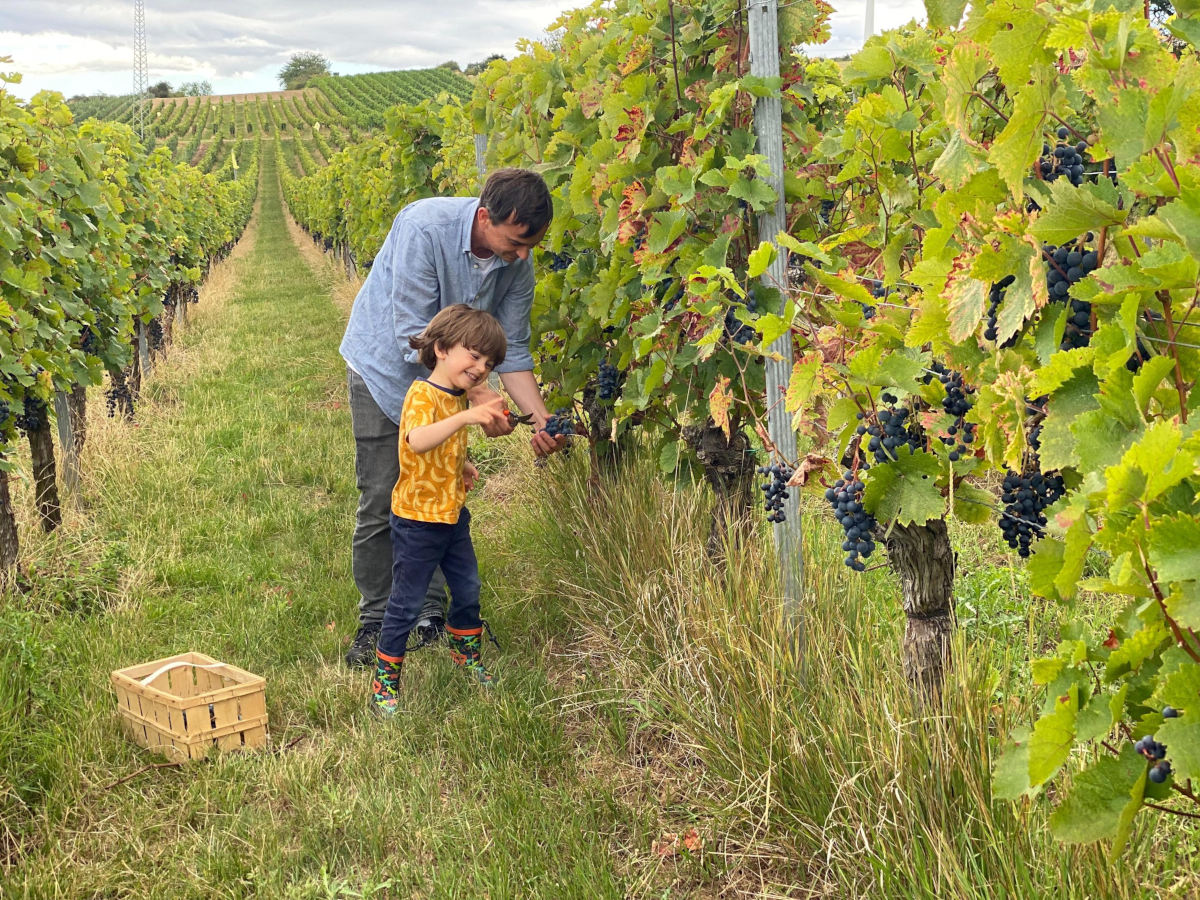
The dedication invested by both vines and vintners is rewarded: this is where intense, concentrated wines are born. Our red wines in particular thrive here, but Riesling, Pinot Gris, and Sauvignon Blanc also benefit from this distinctive terroir.
Neuleininger Schlossberg
Below the town walls of Neuleiningen lies the Schlossberg – the smallest and at the same time the warmest site in the area. Red sandstone in the west and gravel soils in the east shape the slope.
The combination of low water retention and high heat storage results in concentrated grapes with reduced yields, excellent ripeness, and outstanding health. Unlike limestone soils, the sandstone soils barely alter the varietal character: the wines remain clear, direct, and elegant – even at full ripeness“